

Your Order
 FIRST ORDER SPECIAL!
Get 20% OFF on your first order
ORDER NOW
20% OFF FIRST ORDER
FIRST ORDER SPECIAL!
Get 20% OFF on your first order
ORDER NOW
20% OFF FIRST ORDER
Abdominal Injury Case Analysis: Fluid Compartments, Hormones & Body Systems
Sample Content
Analysis of Anatomical Case Scenario: Abdominal Trauma and Homeostatic Response
Analysis of the Anatomical Case Scenario
Following the American Psychological Association’s Guidelines
Student’s Name
Institutional Affiliation
Date
Referencing Style: APA / Word Count: 1209
Analysis of Anatomical Case Scenario
The paper herein takes a closer look at the case of a 32-year-old male patient, having met with a motorbike accident and injured their upper left quarter of the abdomen. The patient has sustained multiple penetration injuries. Although, the patient is awake, and alert with a metal penetrated in their LUQ and abrasions and multiple smaller cuts in LLQ, the patient presents with severe abdominal pain and has profound blood loss of approximately 1 Liters owing to which they are feeling cold and dizzy. Upon arrival at the Emergency department of the hospital, the patient has been infused with normal 18 G IV Saline. His last recorded Vitals indicate a Respiratory Rate = regular at 22-25 breaths/min, Heart rate = 120 beats/min, Blood pressure = 110/70, Temperature = 36.8o C and Oxygen Saturation = 99%. The patient presents with a history of migraine and is currently taking Trexinmet BD. Five hours prior to the accident, patient had marijuana also and there is no other history of medication that has been recorded so far. Their Radial and dorsalis pedis pulses are weak but regular bilaterally.
Affected Visceral Organs (Part 1)
Based on the above case scenario, in its first part, this paper discusses about the visceral organs that would be affected by the injury, followed by the subsequent parts of fluid compartments most impacted, and the effects on cardiovascular, respiratory and urinary systems after the motorbike injury of the abdomen that would try to bring back the body’s homeostasis.
Part 1
Based on the above case scenario, the patient can present with hypovolemic shock and decreased peripheral perfusion owing to the heavy loss of blood during the motorbike accident. If left untreated, it can cause multi-system organ failure owing to ischemia of the vital organs (Taghavi and Askari, 2020). The organs that are most likely affected in the Left Upper Quadrant (LUQ) can be diaphragm and entire spleen. The above part of the diaphragm should be checked for finding out signs of free fluid in the left hemithorax (Rourke et al., 2020). Also, should be checked organs of the LUQ including, Spleen, Stomach, part of the Pancreas, left kidney, upper part of colon, a small part of the liver and skin and nerves of this section (Willacy, 2020).
Fluid Compartments Affected by the Injury (Part 2)
This section would peek into the fluid compartments of the body, the Volume of each fluid compartment and would take a look at the compartment most affected by this injury. It would also suggest the type of dehydration the patient would suffer from because of their motorbike accident.
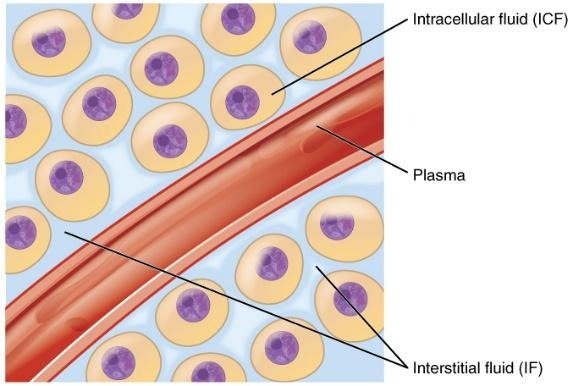
Figure 1: Source https://open.oregonstate.education/aandp/chapter/26-1-body-fluids-and-fluid-compartments/
ICF and ECF Compartments — only if needed
The body fluids are discussed in terms of specific fluid compartments, divided into Intracellular Fluid (ICF) compartment and Extracellular Fluid (ECF) compartment. As seen from Figure 1, The ICF compartment is the system that involves fluid contained in the cells by the plasma membranes. ECF compartment, on the other hand is the compartment having fluid surrounding all the cells of the body (Oregon State University, n.d.). ECF comprises of two primary constituents, Blood plasma and Interstitial Fluid (IF), which is the fluid around the cells except that present within the cells (Oregon State University, n.d.). The ICF constitutes about 60% of the total body water and ECF about 40% (Figure 2). The ICF that an adult body makes is around 25 Liters.
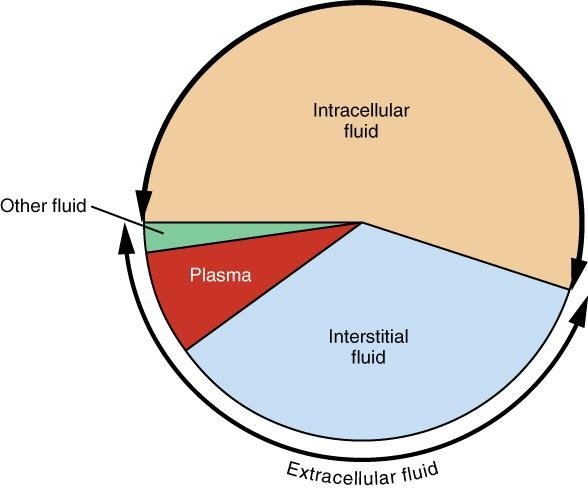
Figure 2, Source: https://open.oregonstate.education/aandp/chapter/26-1-body-fluids-and-fluid-compartments/
In the above case scenario, the body’s fluids will be affected owing to the profound blood loss. This would affect the electrolyte balance and would thus affect both the ICF and ECF compartments together. Owing to the electrolyte imbalance of Na+ and Cl- across the membranes, there will be dehydration. Additionally, as respiratory rate would be increased because of Tachypnea, it would further affect the fluid loss, leading to dehydration. The type of dehydration in this case can be Isotonic dehydration as equal proportion of water would be lost from both the ICF and ECF compartments.
Hormonal Response to Injury (Part 3)
This section illustrates the hormones that would be released early after this injury. In response to the stress experienced by the patient, the adrenal gland hormones, epinephrine and nor-epinephrine would be released. As per Ahsan et al. (2021), the hypothalamic preganglionic neurons stimulate the secretion of epinephrine and nor-epinephrine and also are released dopamine from adrenal medulla. Cortisol is also released in cases of fight-fright and flight (Ahsan et al., 2021) and thus, cortisol would also be released. The response expected out of the release of these hormones would lead on to an increase in blood pressure, an increase in Heart Rate and force of contraction, an increased blood flow to liver, and skeletal muscles of the heart. There would be an increased level of fatty acids and glucose. There would also be a dilation of the airways. In order to maintain Homeostasis, the Renin-angiotensin-aldosterone pathway would be activated that would decrease blood pressure and volume. The lungs secrete ACE and kidneys secrete renin that modifies angiotensin I to angiotensin II. This in turn, compensates for blood loss and aldosterone acts on kidneys to retain Na+ and H2O to the blood.
In the above case, the patient is dehydrated and there is loss of fluid due to injury, the osmotic blood pressure of the patient would rise. The pituitary gland would release ADH to retain water. The patient has thus been put to IV to maintain electrolyte balance and for the prevention of hypotension.
Cardiovascular and Respiratory Effects (Part 4)
This section would take a look at the cardiovascular and respiratory changes that would take place following the abdominal injury. Since the body would detect fall in blood pressure by its baroreceptors owing to rapid loss of blood. The Sympathetic Nervous System would be activated following activation of baroreceptors and chemoreceptors, that would in turn lead to increased heart contractility, and heart rate and would constrict peripheral blood vessels. The heart rate and blood pressure would also be affected by the release of epinephrine and nor-epinephrine. Additionally, the renin-angiotensin-aldosterone pathway would cause arteriolar vasoconstriction and rise in blood pressure. Also, there would be dilation of the airways thereby causing these alterations in the respiratory and cardiovascular system.
Urinary System Response (Part 5)
This section takes a look at how the urinary system would be affected by this injury and bring out homeostasis. Since the bleeding has caused a decrease in blood pressure and blood volume, the glomerular cells get activated because of this change. In order to release more of aldosterone, it makes the kidneys to release more renin. These would lead to an increase in the level of aldosterone and conversion of Angiotensin II from Angiotensin I through ACE (Fountain and Lappin, 2020). Angiotensin would increase the reabsorption of Cl- and Na+. The epinephrine and nor-epinephrine affect the kidney by decrease in renal blood flow and reduction in GFR. Owing to the hormonal regulation, the water moves down the concentration gradient and goes out of nephron to the blood stream (Watson and Austin, 2018).
Conclusion
Concludingly, there would be multi-systemic functioning through release of hormones following the abdominal accident that would bring back the body’s homeostasis. Although, there will be dehydration because of profound blood loss, the release of hormones would try to bring back the body’s homeostasis by working on the cardiovascular, respiratory, urinary, systems to regulate the fluid electrolyte balance and by retaining water.
References
Ahsan, A., et al (2021). Physiology of Endocrine System and Related Metabolic Disorders. In Endocrine Disrupting Chemicals-induced Metabolic Disorders and Treatment Strategies (pp. 3-41). Springer, Cham.
Fountain, J.H and Lappin, S.L. (2020) Physiology, Renin Angiotensin System. StatPearls.
Available at https://www.ncbi.nlm.nih.gov/books/NBK470410/
Oregon State University (n.d.) Anatomy & Physiology 26.1 Body Fluids and Fluid Compartments. Available at https://open.oregonstate.education/aandp/chapter/26-1-body-fluids-and-fluid-compartments/
Rourke et al. (2020) Blunt Abdominal Trauma. StatPearls. Available at
https://www.ncbi.nlm.nih.gov/books/NBK431087/
Taghavi, S. and Askari, R. ( 2020) Hypovolemic Shock. StatPearls. Available at
https://www.ncbi.nlm.nih.gov/books/NBK513297/
Watson, F., & Austin, P. (2018). Physiology of human fluid balance. Anaesthesia & Intensive Care
Medicine, 19(9), 494-501.
Willacy, H. (2020) Left Upper Quadrant Pain. Available at https://patient.info/signs-symptoms/left-upper-quadrant-pain-leaflet#nav-1
Related Services: Healthcare Assignment Help | Psychology Assignment Help | Medical Assignment Help